Parents & Guardians
Autism Myths in Kids: True or False?
A Guide to Parents to Set the Record Straight on Autism Misconceptions
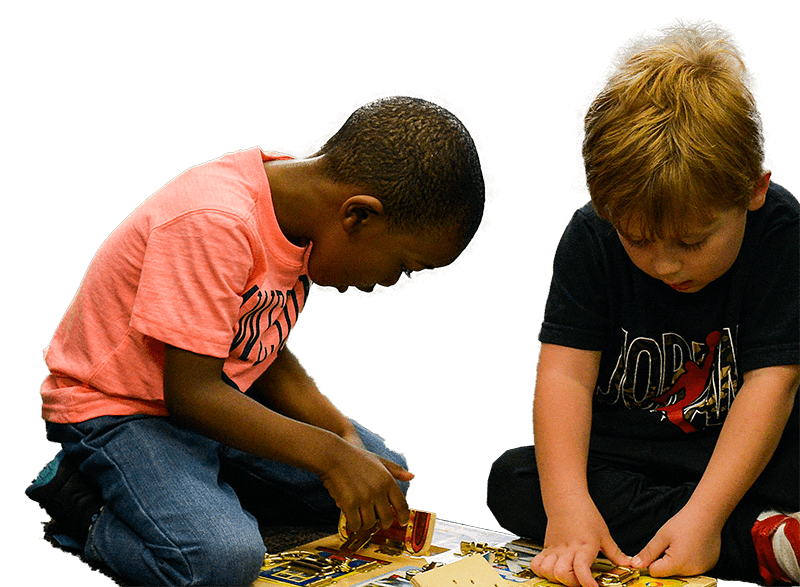
Autism is becoming a more understood, thanks in part to the rise of TV characters with autism spectrum disorder (ASD). Increased exposure in the media expands awareness and respect for families and kiddos with autism, but its portrayal can also raise a lot of questions and assumptions. It’s also important to understand what ASD is not.
Autism Spectrum Disorder or ASD is a broad spectrum of atypical behaviors exhibited by impacted individuals.
We enlisted Hopebridge Director of ABA, Melissa Chevalier, to discuss some of the most common misconceptions connected to autism.
AUTISM IS NOT…
…the same for everyone.
Autism is not just one thing; it is a spectrum. These are children who have their own unique personalities, characteristics, and capabilities.
…indicative of exceptional intellectual or artistic abilities.
This is the side that is often highlighted in fictional stories – think Rain Man. Yet it is misguided to think that autism in itself leads to extreme intelligence or out-of-this-world creativity.
…lower intelligence.
Kids with ASD often learn differently and may be a little slower to catch on in some areas (e.g. social cues), but they may also excel in other areas. It doesn’t mean they understand less or have a lower IQ.
…non-communicative.
A lot of times, if people don’t hear someone vocally talking, they assume he or she cannot communicate at all. With autism and other developmental disabilities, this is not the case, even though some children may not be able to speak.
…the end of the world.
We sometimes see disappointment from families whose kiddos were recently diagnosed with ASD. Admittedly, this is new territory for many and that in itself can be scary, let alone some of the extra strains and worries that come with it.
This list of misconceptions and flat-out falsehoods could go on and on, just like the definition of autism. Thankfully early diagnosis of autism has started to shift the perception. There are more opportunities, therapies, technologies and coping methods for families. Most of all, there are communities that offer support, like the one we’ve built at Hopebridge.